Planning a great date can be a challenge, especially if you are looking for unique English entertainment in Jerusalem. Not to fear, the local English theatres are here to help.
Choosing a Show: Musical or Play? Drama or Comedy?
Choosing a show can be confusing if you don’t know what you enjoy or what the plays are about. Don’t hesitate to look up the plot on Wikipedia or any other theater information page. No one will know and it can help you decide if you want to buy tickets. Check for any (adult) content that might not appeal to you or your companion.
The most important thing is to buy tickets in advance. The content of the show and the restaurant is irrelevant if your date can’t make it. Great seats don’t always cost more than the ones in the back rows or behind pillars, you just have to reserve them earlier. Some theatres don’t have assigned seats and all you have to do is get there earlier than everyone else, it’s always wise to check.
Take a look at the JET calendar to see what’s playing!
The “Dinner” Part
Remember to check what time the show starts, if you go to a restaurant beforehand it is important to have time to finish your meal and arrive at the theatre with time to spare. Eating close to the theatre is best, that way you don’t need to move the car or stress about finding last minute parking.
Ask around for suggestions of restaurants in the area or search online. In case of emergency, ask the ticket office or someone involved with the production where to eat, they will know. Actors eat too.
Going out after a show can be great as well, hit up a local bar, restaurant or just wander the quiet enchanting streets of Jerusalem. If you plan on going out late to eat, make sure the place stays open in time for you to arrive before they close the kitchen. One bad way to end a date is to spend the whole night talking about a great place and then find it’s closed.
I know this sounds like a lot of work but if you took the time to read this whole article you probably have enough time. Click those links and take three minutes to text and check if someone you care about can make it. Someone just might want to join you on an evening journey to explore something new.
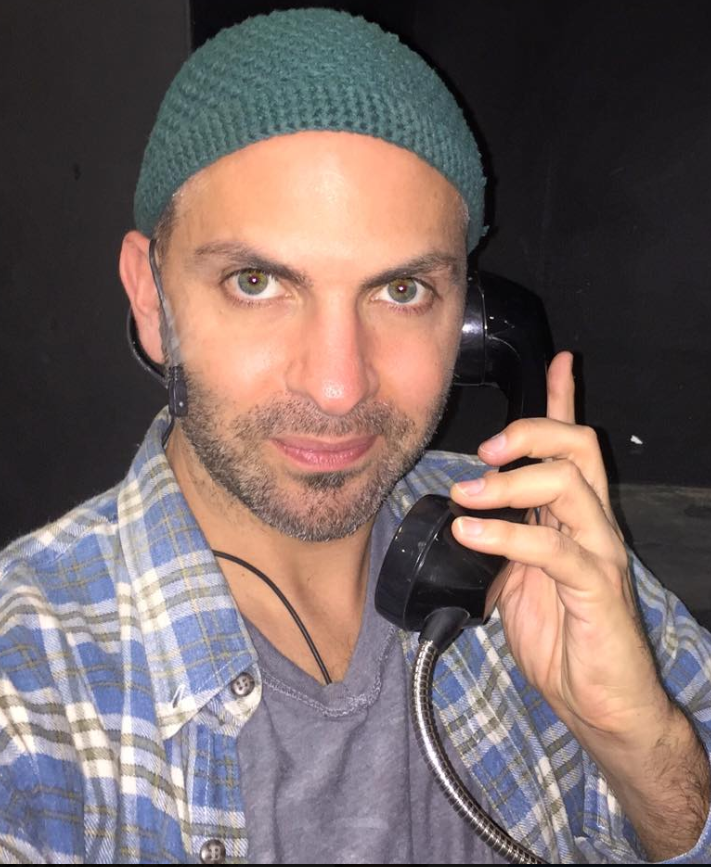
The JET Community’s C.B. Davies spoke with alumni Yossi Caldaron in the spring about his experience with the Jerusalem English Theater Community.
How did you find the English theater community in Jerusalem?
So I was actually an unemployed oleh chadash, and looking to find something that had meaning to it, something I could focus on and which would make me feel like I was working towards and achieving something. So I said, you know what, I love to perform. I love to act and sing, and I’d had some experience in both professional and community theater type situations. I knew people through the grapevine like Eli Kaplan-Wildmann and others, so I was able to figure out what was going on in Jerusalem and Tel Aviv, which was where I was living. There wasn’t really much of a community theater scene [in Tel Aviv], so I had to travel to Jerusalem.
Talk about your first community theater experience in Israel.
Rent was my first experience with community theater and it was an absolutely amazing, rewarding, phenomenal experience. I met fantastic and talented people. I really can say, in the four years that I lived in Israel, doing Rent–and, of course, meeting my husband–but doing Rent was the highlight of my aliya experience. It was really just–I can’t even say how amazing of an experience it was.
Was Rent the only show you did?
I also did a smaller production called Danger. It was an original with Danny Palmer. He wrote it. That was my second and my last experience, and then I moved back to the U.S. shortly thereafter. Danger was also a really positive experience, but you know it was a very small production. There were only five or six people. So it wasn’t the same–you know, meeting new people and bonding–it didn’t have the same sort of camaraderie of a larger cast.
Did you see any other shows?
It was difficult, living in Tel Aviv, but I actually did see you in a show; you played a nazi soldier, right? That was really good. It was excellent actually. It was hard to get to Jerusalem to see shows. Our goal is to move back to Israel after we’ve worked [in the United States] for several years and saved up as much money as possible. One of one of the things I look forward to is returning to Israel. We’re thinking when we return of where we might live–it might be Jerusalem, it might be Tel Aviv–but I would definitely want to get involved again in community theater when we return.
So you plan on coming back?
Yeah. We know we don’t know what Hashem has in store for us, but in our mind [New York] is a temporary move, and our goal is to get back to Israel, certainly.
What you miss most; in Israel and in the community?
I wasn’t so entrenched in the theater community because I only did two shows and I lived in Tel Aviv; but the two shows that I did, I was made to feel so welcome and like I was part of the community. I do miss that feeling–that feeling of togetherness, of camaraderie–like you’re in something with a lot of other people, like you’re in it together. I miss that. I also miss falafel, hummus, and sabich.
You can’t get that in New York?
Not like in Israel. I’ve missed the food so much. I can’t even tell you.
Do you plan to come and visit?
Yeah we do. We do come and visit from time to time, because Amir’s family’s there. So we’ll be there next time for the holidays. Maybe until after Yom Kippur. But if we have enough time then we might be able to stay through Succot. So we’ll see.
So you’re in the Diamond business. Is that what you did in Israel?
At first I wasn’t working, for about a year and a half. Then I worked for the GIA–the Gemological Institute of America–as a diamond grader. I’d had a business that I had sort of walked away from in order to live in Israel. Then I started getting a lot of interest again. At that point–right after I did danger–is when I started travelling back and forth. I would fly to New York every month to work with my clients and then I would fly back to Israel and it just became difficult, and the parnasa was here, and it was a lot more than I was able to make in Israel. So I said let’s try America for a while and save up as much as we can, and then, God willing, we’ll get back [to Israel].
Have you stayed connected with the community?
Not so much. I mean Eli, we’ve been in contact a little bit. When he came to New York we hosted him for Shabbat lunch. I actually had lunch with some of the rent people–probably a year ago now–Coren Feldman and Noa. I can’t remember if anybody else came but a few of us got together and we had lunch over at By Chloe. It’s an amazing vegan fast food restaurant.
Was Jerusalem your first community theater experience? Does your experience in community theater help you today?
It’s sort of a point of nostalgia for me when I look back at the years that I lived in Israel. It puts a smile on my face and it makes me miss the experience a little bit more. I’m not sure that it contributed to my professional life or anything. I had done some very high quality community theater productions before, in Hawaii actually. I felt a similar type of camaraderie, except it was different because, you know, being in Israel with a lot of olim and having that shared experience of living in a different country and getting used to new ways of doing things and being in it together felt a little more special than the previous times that I had done community theater productions.
Would you recommend that others become part of the english theater community in Jerusalem?
Yes sir. Certainly I would recommend it for anybody that wants to put themselves on a stage, whether they’re highly experienced or looking to get into it [theater]. I would really recommend the experience because I think it’s something special, and that they will remember it for the rest of their lives, and will also build new friendships and have a good time in the process.
What was unique about the Jerusalem theater community?
I felt like there was less attitude and ego. Maybe there is and I just didn’t see it, but I felt like people were just really nice and open and were having fun and also very talented. The quality of the productions was really good. I felt like everyone had an open attitude and was very accepting of everyone and it was a really great environment. It was a nurturing environment. I think when you get a bunch of performers together there can be a sense of “diva-ness,” for lack of a better term. Like who’s this or who’s better or this or that. None of that really mattered. It was just people getting together wanting to put on something of high quality and have a great time doing it. It felt like there was just a really good environment. I always tell Amir that doing Rent was really the highlight of my aliya experience. I always tell him that. I was watching the movie Rent and I got a little teary; I started to cry a little bit.
How can we help people learn about the Jerusalem theater community?
I think this website that you’re doing to centralize all the happenings in community theater into one location–so that they’re easily accessible and people have more information–is fantastic. I think it’s a great step. Other than that, social media is always amazing. Like maybe an Instagram–an account that just takes pictures of all the different community theater happenings, of when the shows are, of the actors in action, of all the different productions. I think that could be a really good way to get the word out.